 Post by
What is Structural Building Design in Civil Engineering? – Definition, Process & Importance
After military engineering, civil engineering is considered the second-oldest engineering discipline. It focuses on the planning, design, construction, and maintenance of the built environment, especially public infrastructure such as roads, highways, bridges, dams, railways, and drainage systems.
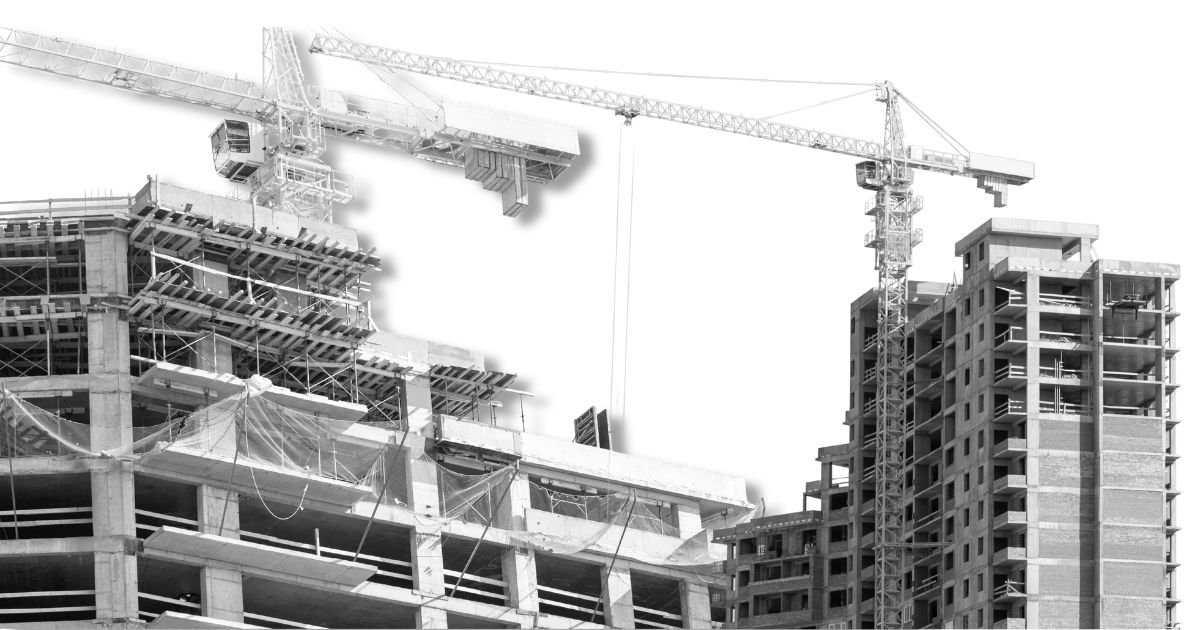
Structural building design in civil engineering is a specialised branch that deals with analysing and designing safe, stable, and economical building structures. It involves applying engineering principles, methods, and tools to ensure that a structure can safely resist all types of loads, including dead loads, live loads, wind loads, and seismic forces.
The primary responsibility of a structural engineer is to evaluate how internal and external forces act on a structure and to design structural members using appropriate materials and reinforcements. The design must satisfy multiple requirements, including client needs, safety standards, durability, cost-effectiveness, and government building codes.
There is a strong and essential relationship between architects and structural engineers, as both professionals work closely throughout a project. Architects focus on creating buildings that are functional, visually appealing, and space-efficient, while structural engineers ensure that these designs are safe, strong, and durable. Through close collaboration, they deliver structures that are not only aesthetically pleasing but also structurally sound and compliant with all engineering standards.
Key Components and Principles of Structural Design in Civil Engineering
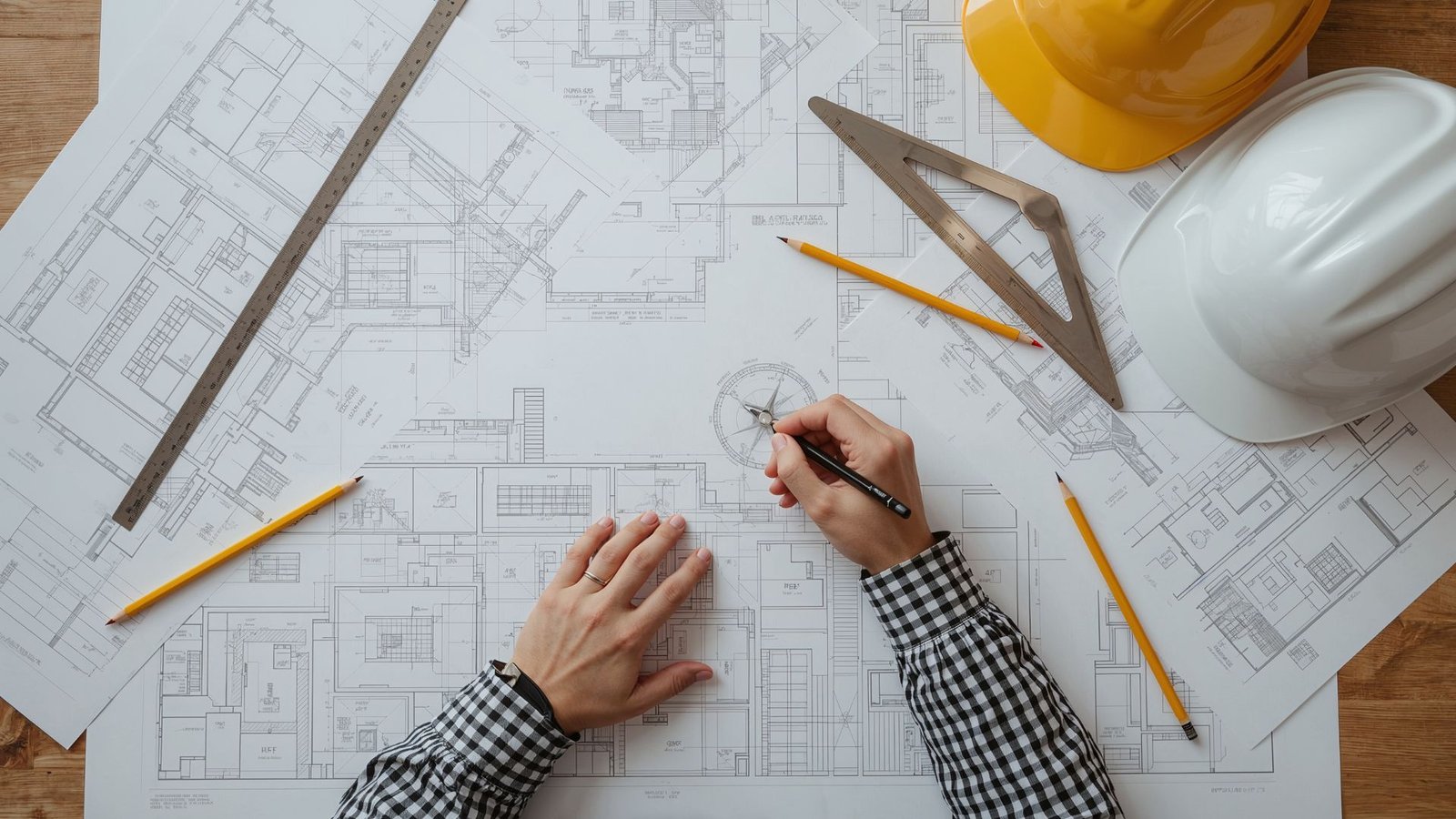
Structural design in civil engineering is a vital part of the overall design and construction process. It involves the systematic planning, analysis, and design of structural elements that resist, transfer, and support various loads and forces acting on a structure.
The primary objective of a structural engineer is to ensure that a structure remains safe, stable, durable, and functional throughout its entire service life under different loading and environmental conditions.
Below are the key components and principles of structural design in civil engineering.
1. Load Analysis in Structural Design
Load analysis is a crucial element of structural design in civil engineering. It involves identifying and evaluating all the loads acting on a structure to ensure that the designed system can safely withstand different types of forces throughout its service life. This process includes determining all potential loads and forces that a structure may experience, such as dead loads (permanent loads including the self-weight of the structure), live loads (temporary loads caused by occupants, furniture, and equipment), wind loads, and seismic loads. Accurate assessment of these loads is essential for ensuring structural safety, stability, and durability.
2. Material Selection in Structural Design
Construction materials must be selected carefully based on the specific structural requirements and the magnitude of expected loads. The choice of material—such as steel, timber, concrete, or composite materials—directly influences the strength, durability, safety, and overall cost of the structure.An appropriate material selection ensures that the structure performs efficiently under applied loads while maintaining long-term serviceability and economic feasibility.
3. Structural Elements in Civil Engineering
Structural elements, including foundations, beams, columns, walls, and slabs, play a vital role in maintaining the stability, strength, and safety of a structure. Each element must be carefully designed to efficiently resist, distribute, and transfer loads to other structural components and ultimately to the foundation. Proper design ensures that the structure performs reliably under all applied loads and environmental conditions.
4. Structural Analysis in Civil Engineering
Structural analysis uses mathematical models and software (e.g., FEA, STAAD.Pro) to evaluate structural behaviour under loads, ensuring compliance with safety and stability standards. By simulating real-world forces—such as gravity, wind, and seismic activity—engineers verify design integrity, optimize materials, and incorporate safety factors to prevent structural failure.
5. Sustainability in Structural Design
Modern structural design integrates sustainability to minimize environmental footprints by using eco-friendly, durable materials and energy-efficient, low-carbon techniques. Strategies include optimizing passive heating/cooling, using sustainable materials like engineered wood or recycled composites, and adopting renewable energy, which enhance long-term building performance, reduce energy consumption, and improve cost-effectiveness.
6. Design Codes & Standards in Structural Engineering
Design codes are mandatory, periodically updated, and legally enforceable guidelines in civil engineering, including IS (Indian Standards), ACI, and Eurocodes, which define minimum requirements for structural safety, reliability, and material strength. These standards ensure structures resist loads, enhance durability, and minimize failure risks while incorporating modern construction techniques.
7. Design Codes & Standards in Structural Engineering
Serviceability in structural engineering ensures structures remain functional, comfortable, and durable under normal usage, preventing issues like excessive bending, vibrations, or cracking that impair usability, even if the structure is safe from collapse. Key considerations include controlling deflection for structural integrity, minimizing vibrations for user comfort, managing cracks for durability/water-tightness, and ensuring long-term resistance to environmental degradation.
8. Load Combinations & Factors of Safety in Structural Design
In structural engineering, load combinations and factors of safety (FoS) are essential for designing safe, durable, and reliable structures by accounting for uncertainties in materials, construction, and environmental conditions. Load combinations consider multiple, simultaneous loads—such as dead loads (permanent weight), live loads (occupancy), and environmental loads (wind/seismic)—to identify the worst-case, maximum stress scenarios. Factors of safety, which include load factors (e.g., typically 1.2 for dead, 1.6 for live loads) and material reduction factors, provide a crucial margin of safety against potential failure.
9. Future Trends in Structural Design
Structural engineering is undergoing rapid transformation through smart materials (e.g., self-healing concrete), AI-driven design optimization, 3D printing (additive manufacturing), and sustainable, low-carbon construction practices. These innovations enhance structural longevity, reduce waste, and improve efficiency, allowing for safer, more sustainable, and cost-effective infrastructure development.
What is the Structural Design Process?
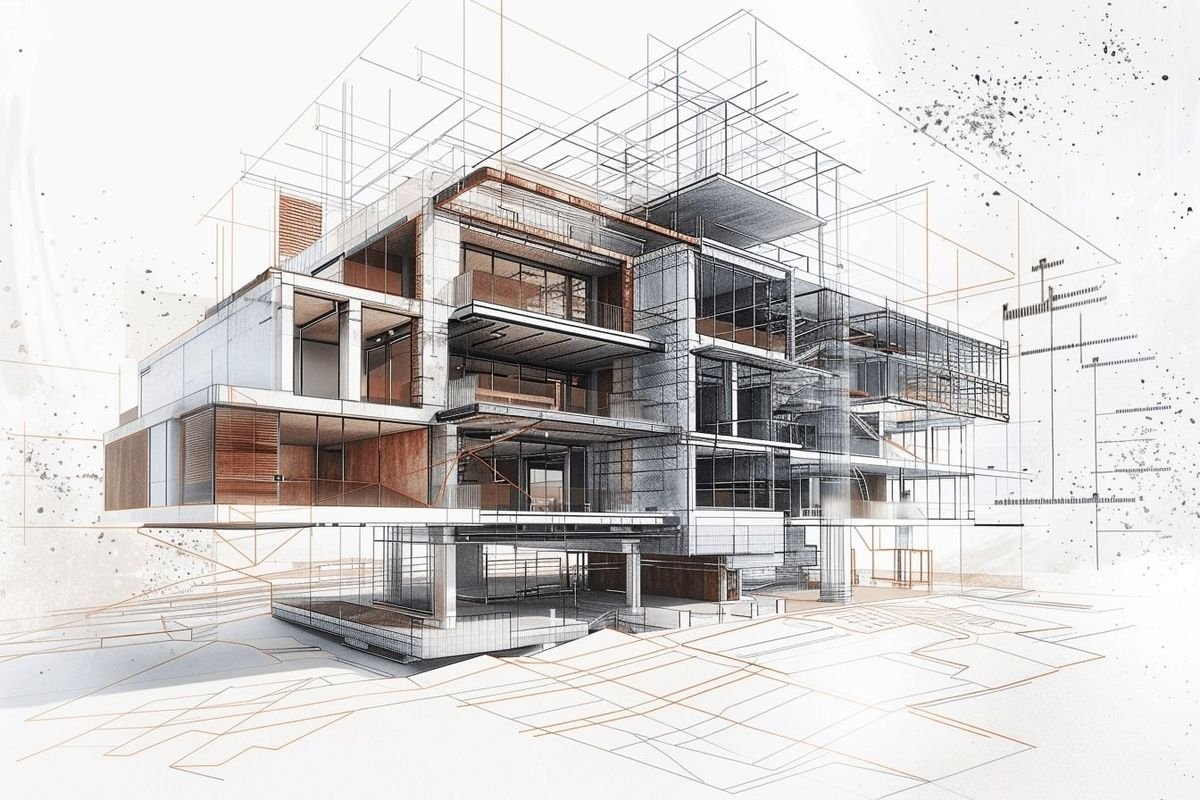
The structural design process involves analysing, planning, and detailing a building’s framework to ensure safety, stability, and efficiency by combining engineering principles, material science, and regulatory codes. Key steps include gathering project requirements, conducting site analyses, calculating loads, performing structural modelling/analysis, designing components, detailing, and peer review.
Key steps in the structural design process include:
Step 1 : Project Handling and Planning
The initial, crucial step in the structural design process is conceptual design and project planning. This phase focuses on gathering detailed information to create a robust, safe, and efficient foundation for the project. Key actions and information gathered in this step include:
Step 2: Site Assessment
Conduct a comprehensive site survey to collect critical information on soil conditions, geological features, and environmental factors that may impact the structural design. Perform geotechnical investigations and soil testing to determine the site’s bearing capacity, stability, and suitability for foundations. Additionally, account for site-specific considerations such as local climate variations, seismic activity, drainage, and other environmental constraints that could influence the design. A thorough site assessment ensures that the structure is safe, stable, and optimized for both performance and cost-effectiveness throughout its lifespan.
Step 3: Load Analysis
After project planning and site assessment, the next critical step in the structural design process is load analysis. This involves identifying and evaluating all forces and loads that the structure will experience during its lifetime, ensuring the design is both safe and efficient.
Key types of loads considered include:
- Dead Loads: Permanent loads such as the weight of structural elements, walls, floors, and fixed equipment.
- Live Loads: Temporary loads caused by occupants, furniture, equipment, and other movable elements.
- Environmental Loads: Forces from natural events, including wind, snow, rain, and seismic activity.
- Special Loads: Any additional loads specific to the project, such as machinery, impact, or thermal effects.
Engineers calculate these loads using mathematical models, building codes, and software tools to determine how they will affect beams, columns, slabs, and foundations. Accurate load analysis is crucial for designing structures that are safe, durable, and capable of performing under all expected conditions.
Step 4: Material Selection
Following load analysis, the next essential step in the structural design process is material selection. Choosing the right materials ensures that the structure is safe, durable, cost-effective, and environmentally responsible.
Key considerations for selecting materials include:
- Strength and Durability: Materials must safely withstand applied loads and environmental stresses throughout the structure’s service life.
- Suitability for Structural Components: Different elements may require specific materials, such as reinforced concrete for foundations, steel for beams and columns, or timber for lightweight structures.
- Sustainability: Using eco-friendly or recycled materials helps reduce environmental impact and supports energy-efficient construction practices.
- Cost-effectiveness: Balancing performance and budget ensures the project remains feasible without compromising safety or quality.
- Compatibility: Materials must work well together, avoiding issues like corrosion, differential thermal expansion, or chemical reactions.
Careful material selection guarantees that the structure can resist all loads, maintain integrity over time, and deliver long-term performance, while also optimizing costs and sustainability.
Step 5: Preliminary Design
Modern structural design integrates sustainability to minimize environmental footprints by using eco-friendly, durable materials and energy-efficient, low-carbon techniques. Strategies include optimizing passive heating/cooling, using sustainable materials like engineered wood or recycled composites, and adopting renewable energy, which enhance long-term building performance, reduce energy consumption, and improve cost-effectiveness.
Step 6: Structural Analysis
Structural analysis is a cornerstone of civil engineering, acting as a predictive, simulation-based discipline that determines how a structure—such as a building, bridge, or tower—will behave under various loads and environmental conditions. By applying principles from physics, mechanics, and mathematics, engineers use tools like STAAD.Pro, ETABS, and SAP2000 to evaluate the safety, stability, and durability of a structure, ensuring it can withstand everyday use and extreme events without failure.
Step 7: Detailed Design
The detailed design phase builds on the preliminary design and structural analysis, translating concepts into comprehensive construction-ready plans. This step ensures the structure is safe, functional, and fully compliant with building codes.
Key activities include:
- Final Member Sizing: Determining exact dimensions, cross-sections, and reinforcement for beams, columns, slabs, and foundations.
- Connection Design: Designing joints, fasteners, and connections to safely transfer loads between structural elements.
- Detailed Drawings: Creating construction drawings, specifications, and schedules for contractors.
- Code Compliance and Verification: Ensuring all designs meet national and international standards, such as IS codes, ACI, or Eurocodes.
- Coordination with Stakeholders: Collaborating with architects, MEP engineers, and clients to integrate all design aspects.
The detailed design ensures that the project can proceed to construction with confidence, reducing errors, cost overruns, and safety risks.
Step 8: Construction Phase
The construction phase is the final step in the structural design process, where all planning, analysis, and design efforts are translated into the physical structure. This phase ensures that the structure is built safely, efficiently, and according to the approved design specifications.
Key activities include:
- Implementation of Designs: Executing detailed construction drawings, following member sizes, reinforcements, and connection details.
- Quality Control: Monitoring materials, workmanship, and construction methods to maintain safety and durability standards.
- Site Supervision: Ensuring that the construction aligns with structural plans, building codes, and project requirements.
- Coordination: Continuous communication between structural engineers, contractors, architects, and stakeholders to resolve issues promptly.
- Testing and Inspection: Conducting tests such as concrete strength, weld inspections, and load testing to verify structural performance.
The construction phase transforms the engineered plans into a safe, functional, and durable structure, completing the structural design process and ensuring long-term reliability.
Step 9: Post-Construction Evaluation
The post-construction evaluation is the final step in the structural design process, ensuring that the completed structure performs as intended, meets safety standards, and complies with all design specifications. This phase helps identify potential issues early and informs future maintenance or improvements.
Key activities include:
- Structural Inspections: Assessing the integrity of beams, columns, slabs, foundations, and connections to detect cracks, deflections, or other defects.
- Load Testing: Verifying that the structure can safely handle designed dead, live, and environmental loads.
- Compliance Checks: Ensuring that the construction meets building codes, safety regulations, and design specifications.
- Performance Monitoring: Evaluating vibrations, deflections, and other serviceability aspects to ensure long-term functionality and user comfort.
- Documentation & Lessons Learned: Recording findings, maintenance recommendations, and improvements for future projects.
Post-construction evaluation ensures that the structure is safe, durable, and fully functional, completing the structural design lifecycle.
Purpose of Structural Design in Civil Engineering
Structural design in civil engineering creates safe, stable, and durable structures (buildings, bridges, dams) that withstand expected loads and environmental conditions, ensuring regulatory compliance and functionality. It focuses on safety by managing loads, serviceability to prevent excessive deformation, durability, cost-effectiveness, and sustainability.
Advances in Structural Design
Modern structural design has been transformed by integrating Building Information Modeling (BIM) and 3D simulations, enabling precise, data-driven, and optimized construction. High-performance materials like self-healing concrete, cross-laminated timber (CLT), and fiber-reinforced polymers enhance structural longevity and adaptability. Furthermore, sustainable practices, including lifecycle assessments (LCA) and low-carbon technologies, are creating resilient, energy-efficient, and eco-friendly infrastructures.
Types of Careers in Structural Design Engineering

Structural designers analyse, design, and ensure the stability of infrastructure, using material science and physics to create safe buildings, bridges, and specialized structures. Beyond initial design, these professionals, who include structural engineers and draftspersons, manage, review, and supervise construction projects, with roles in forensics, specialized consulting, and freelancing.
1. Structural Engineer
Structural engineers are specialized civil engineers who ensure the safety, stability, and integrity of built structures such as buildings, bridges, towers, and tunnels. They utilize principles of material science, physics, and engineering mechanics to analyse how structures withstand loads, environmental forces (wind, earthquakes), and their own weight.
2. Civil Design Engineer
As a civil designer in structural design, you create detailed structural plans and digital models for buildings, bridges, and other infrastructure. While designing, you consider structural integrity, construction materials, and coordination with electrical, plumbing, and sewage systems. You may also review and revise drawings to meet client requirements while ensuring the final structure is safe, functional, and buildable.
Civil designers play a crucial role in bridging conceptual ideas and construction-ready plans, making them essential members of any structural design team.
3. Design Engineer
A structural design engineer creates detailed plans, 3D models, and simulations for buildings, bridges, and other infrastructure using advanced software like STAAD.Pro, ETABS, Revit, and BIM tools. They ensure that structures are safe, durable, and compliant with building codes and regulations.
Design engineers analyse loads, materials, and environmental factors such as wind and seismic activity to develop cost-effective and buildable structures. They also coordinate closely with architects, civil engineers, and construction teams to ensure smooth project execution from design to construction.<br>
This role combines technical expertise, problem-solving, and collaboration, making design engineers crucial to modern civil engineering projects.
4. Structural Materials Engineer
A structural materials engineer specializes in selecting, testing, and analysing construction materials—such as concrete, steel, and composites—to ensure safety, durability, and efficiency in buildings and infrastructure. They evaluate load-bearing capacity and environmental factors to optimize performance, adhering to regulatory standards while creating cost-effective, sustainable designs.
5. Structural Designer
Structural designers are crucial in creating safe, durable frameworks for infrastructure by analysing loads, materials, and environmental factors like wind and seismic activity. Utilizing advanced 3D software, they collaborate with teams to translate concepts into reality, ensuring compliance with codes, cost-effectiveness, and structural integrity.
Top Software Tools for Structural Design You Can Use
Structural design software plays a critical role in the planning, analysis, and simulation of buildings, bridges, and other infrastructure. These tools allow engineers to model structures under various conditions, optimize materials, and ensure safety, stability, and compliance with building codes.
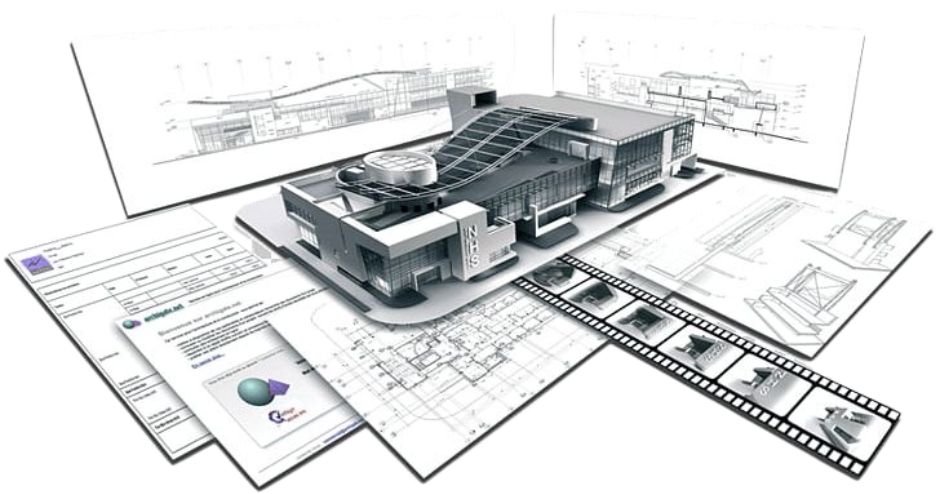
Structural engineers are specialized civil engineers who ensure the safety, stability, and integrity of built structures such as buildings, bridges, towers, and tunnels. They utilize principles of material science, physics, and engineering mechanics to analyse how structures withstand loads, environmental forces (wind, earthquakes), and their own weight.
The choice of software often depends on project type, design requirements, and personal or team preferences. Many engineers use a combination of tools to achieve accurate and efficient designs.
Here are some of the most widely used structural design software in civil engineering:
STAAD.Pro:
A leading structural analysis and design software, STAAD.Pro allows engineers to model, analyze, and design buildings, bridges, towers, and industrial structures with precision. It supports various materials, load combinations, and international design codes, enabling engineers to optimize structural performance, ensure safety, and streamline project workflows.
ETABS:
(Extended Three-Dimensional Analysis of Building Systems): ETABS is a premier software by Computers and Structures, Inc. for structural analysis and design, particularly suited for high-rise and multi-story buildings. It provides a specialized interface to model complex structural systems, automate load calculations—including wind and seismic loads—and perform advanced nonlinear simulations, enabling engineers to create safe, efficient, and optimized structures.
SAFE:
SAFE is a specialized structural engineering software developed by Computers and Structures, Inc. (CSI), specifically designed for the advanced modeling, analysis, and design of concrete floor systems and foundations. It is widely used in civil and structural engineering to handle complex geometries, slab systems, mat foundations, and load transfer mechanisms. SAFE supports multiple international design codes, enabling engineers to ensure structural safety, accuracy, and code compliance while producing efficient and reliable foundation and floor designs.
SAP2000:
SAP2000, developed by Computers and Structures, Inc. (CSI), is a premier, general-purpose structural analysis and design software used for creating, analyzing, and designing diverse projects like buildings, bridges, and industrial structures. Utilizing the SAPFire® Analysis Engine, it offers advanced linear/nonlinear, static/dynamic, and seismic analysis through an intuitive, single-user interface.
CSI Bridge:
CSI Bridge is a specialized and integrated bridge engineering software developed by Computers and Structures, Inc. (CSI). It is designed for modeling, analysis, and design of various bridge systems such as suspension bridges, cable-stayed bridges, and concrete or steel girder bridges. Using a parametric, object-based modeling approach, CSI Bridge simplifies complex bridge geometry, load definition, and staged construction analysis, helping engineers improve accuracy, efficiency, and overall design workflow.
Perform-3D:
Perform-3D (often stylized as PERFORM-3D) is a high-end structural engineering software developed by Computers and Structures, Inc. (CSI). Unlike general-purpose CAD tools, it is a specialized software designed for nonlinear structural analysis and performance-based seismic design of complex building structures.
CSI Detail:
CSI offers several powerful tools for structural detailing, primarily focused on automating the transition from structural design and analysis models to detailed construction and reinforcement drawings, improving accuracy and efficiency in project delivery.
MIDAS Civil:
MIDAS Civil is a professional Finite Element Analysis (FEA) and structural design software specifically engineered for bridges and large-scale civil structures. Developed by MIDAS IT, it is widely regarded as an industry-standard solution for complex infrastructure projects.
MIDAS Gen:
MIDAS Gen is a comprehensive Finite Element Analysis (FEA) and structural design software widely used for modeling, analysis, and design of buildings and general structures. It enables the integrated design of steel, concrete, and composite structures within a single interface and offers advanced capabilities such as nonlinear analysis, seismic (pushover) analysis, and construction stage analysis.
Prota:
Prota 50 mg/5 ml Injection is a prescription medication containing Protamine Sulfate. It is used as an antidote to reverse the anticoagulant (blood-thinning) effects of heparin, particularly during surgical procedures or in cases of heparin overdose. Protamine Sulfate works by neutralizing heparin in the blood, thereby reducing the risk of excessive bleeding. This injection must be administered under the supervision of a qualified healthcare professional.
Robot Structural Analysis:
Autodesk Robot Structural Analysis Professional is a comprehensive, BIM-integrated structural analysis and design software used for modeling, analysis, and design of a wide range of structural systems, including steel, reinforced concrete, and complex geometries. It allows engineers to simulate wind loads, perform nonlinear, static, and modal analyses, and verify structural designs in compliance with international design codes.
Dlubal Software:
Among all Dlubal products, RFEM stands out as the best and most comprehensive solution for structural engineers, offering unmatched accuracy, flexibility, and advanced FEA capabilities for modern engineering challenges.
Autodesk Infra Works:
Autodesk Infra Works is a powerful 3D conceptual design and planning software used by AEC professionals to model, analyze, and visualize infrastructure projects within their real-world context. It enables the rapid creation of data-rich 3D environments by integrating GIS, CAD, and Revit data, helping teams improve design decisions, stakeholder communication, and project approvals.
Civil 3D:
Autodesk Civil 3D is a leading BIM-based design and documentation software for civil engineering, land development, and infrastructure projects. It enables professionals to create dynamic 3D models for roads, utilities, and grading while automating design workflows to improve accuracy, productivity, and coordination. Key capabilities include advanced surface modeling, corridor design, and intelligent, data-driven drafting.
ArcGIS:
ArcGIS is a comprehensive, industry-leading suite of GIS software developed by Esri for creating, managing, analyzing, and mapping geographic data. It supports advanced 2D and 3D visualization, spatial analysis, and seamless data sharing across desktop (ArcGIS Pro), cloud-based platforms (ArcGIS Online), and enterprise GIS systems.
Start Your Civil Engineering Career
Top career paths after B.Tech Civil Engineering include becoming a Structural Engineer, Construction Manager, Urban Planner, Geotechnical Engineer, Environmental Engineer, Transportation Engineer, or Project Manager, focusing on designing, building, and maintaining infrastructure, or leveraging skills in government (PWD, Railways), consultancies, real estate, or even entrepreneurship in contracting and supply. Specialising through M.Tech in areas like Water Resources or Geo-informatics also offers advanced opportunities.